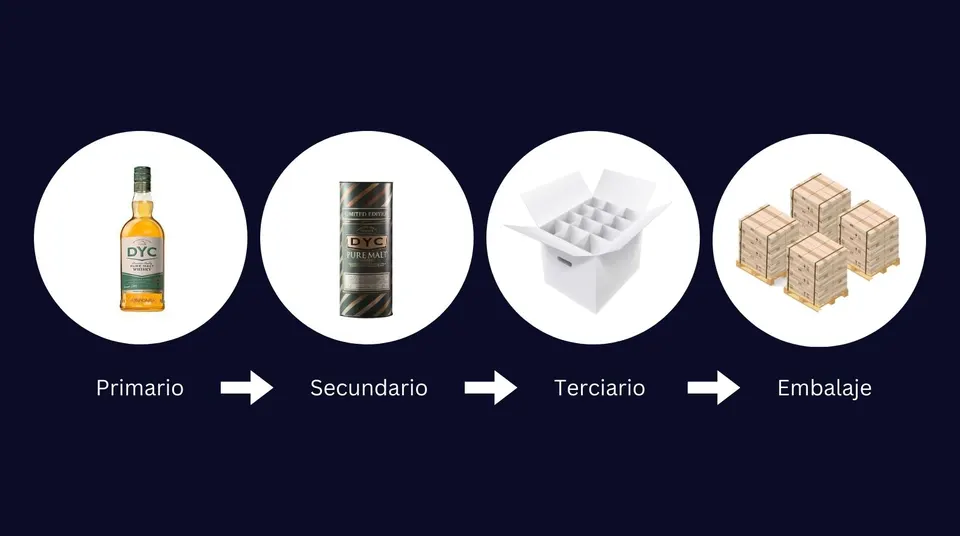
In the world of transporting and storing products, the terms "primary packaging" and "transit packaging" (envase and embalaje in Spanish) are often used interchangeably, but in reality they have different functions and characteristics, even though they are closely related. At Fatecsa, experts in packaging solutions, we explain the key differences between these concepts so that you can choose the most suitable one for your business needs.
What is primary packaging?
Primary packaging is the material used to contain the product directly. Its main function is to protect the product from possible physical damage and keep its characteristics in optimal condition during transport and storage. However, primary packaging does not just protect your products: it is also a powerful marketing tool that communicates your brand identity and attracts consumers at first glance.
What is transit packaging?
Transit packaging, for its part, refers to the additional protection given to the product or its primary packaging during transport and storage. Its aim is to ensure the integrity of the goods throughout the supply chain. Transit packaging tends to be sturdier and is designed to withstand external factors such as knocks, vibrations or adverse weather conditions. For example, you have surely heard of edge protectors as a way of adding reinforcement when packing or palletising goods.
Transit packaging is crucial to prevent damage during logistics and to ensure the product reaches the consumer in perfect condition.
Key differences between primary and transit packaging
- Contact with the product: primary packaging is in direct contact with the product, while transit packaging is responsible for protecting it during transport.
- Main function: primary packaging focuses on preserving the product and presenting it to the consumer, while transit packaging ensures the product is protected during transfer and handling.
- Level of protection: primary packaging protects the product from external agents, while transit packaging reinforces that protection against knocks, drops or difficult transport conditions.
In short, both primary and transit packaging are essential within the supply chain, even though they perform different functions. At Fatecsa we have a wide variety of solutions to make sure your products are always well protected, in both their primary and their transit packaging. Get in touch and discover the best option for your business!
You can get advice and a quote on our website www.fatecsa.com